Kromě obecných sond do povahy kulturních válek, populizmu či politické korektnosti nabízíme vhled do různorodých témat jako sociální sítě, manosféra, postkomunizmus, transgender identita, vlci na Broumovsku nebo asistovaná smrt. Navíc přinášíme také zahraniční vhledy do vyhrocené situace na Slovensku, v Německu, Maďarsku, Polsku, Estonsku či Litvě.
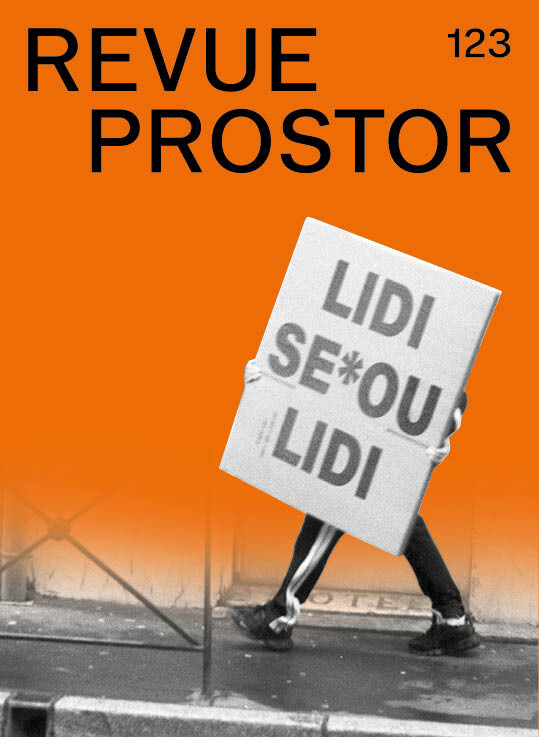
Esejí jmenovitě přispěli*y například novinářka Apolena Rychlíková, divadelní režisér Ivan Buraj, aktivistka Lenka Králová, historik Petr Hlaváček, lingvistka Jana Valdrová, filozof Tomáš Hříbek nebo kurátorka Marie Foltýnová. Literární texty poskytli*y SJ Fowler, Natálie „Tali“ Schejbalová, Markéta Pilátová, Lenka Chýle, Pavla Horáková nebo Karel Škrabal, autor ikonické básně „Lidi serou lidi“, která inspirovala název celého čísla a končí veršem: „Až se Bůh nasere / lidi nebude mít co srát.“
Z čísla si můžete přečíst:
- Lidi se*ou lidi aneb polarizace // Ozvěny Prostoru #8
- Divadlo jako most mezi zákopy kulturních válek, po kterém můžeš chodit a na kterém můžeš i postát
- Trans* lidé nejsou jen vděčné mediální téma
- Do not liberate me. I will do it myself.
- From Haiti’s Maître Conte to Populist Leaders: The Art of Crafting Political Narratives
- Ostáva nám iba kĺzanie po povrchu? Hádam nie
- Walking the Streets of Inequality in Lithuania
- Polarization and Populism: how did we get to the present?
- The Long Shadow of Trump in Poland
- Geschlechtergerechte Sprache im politischen Wettbewerb
This content was created as part of the Perspectives – the new label for independent, constructive and multi-perspective journalism. PERSPECTIVES is co-financed by the EU and implemented by a transnational editorial network from Central-Eastern Europe under the leadership of Goethe-Institut. Find out more about PERSPECTIVES: goethe.de/perspectives_eu.
Co-funded by the European Union. Views and opinions expressed are, however, those of the author(s) only and do not necessarily reflect those of the European Union or the European Commission. Neither the European Union nor the granting authority can be held responsible.