

Jak se kytovci stávají jedněmi z nás
Obrazy a záběry kytovců mě dovedou okamžitě uklidnit a zároveň ve mně vyvolávají hluboký žal. Dlouho nás přitom jejich…
For centuries, Hungary has had to ask the same question - is the country closer to the East or the West? It’s a question loaded with the legacies, traumas and changes of the past decades. With the help of two Hungarian public experts, this article will analyse the processes of Hungary's depolarization. Further, this article will explore to what extent this tension between Eastern and Western alignment is specific to Hungary, rather than an issue endemic to Central-Eastern Europe, Europe as a whole, or, possibly extending beyond the continent.
Hungary is a country with deep social polarisation. But how did we get here? WHat are the causes and factors that led to this environment? Generally speaking, Hungarian social and political polarisation is the result of a combination of factors, which has intensified in recent years. The historical past (world wars, regime change) has created deep fault lines, often reinforced by political parties and the media. Economic inequalities, rural-urban disparities and global trends also contribute to these divisions.
The strong individualism of Hungarian society differentiates it from both Eastern and Western cultures, while social trust and civic activity are low. The historical experience of failure and occupation has resulted in a closed-minded attitude that has reinforced individualism.
Polarisation is also reflected in the opposition between political camps, heated online debates and conflicts between family and friends. The Tisza Party, led by Péter Magyar, has emerged as a new political force against Fidesz, further increasing tensions. At the same time, Péter Magyar had strong links with the ruling party in the past, including his ex-wife Judit Varga, the former justice minister who lost her position in the wake of the domestic paedophile pardon scandal. Electoral campaigns and party-based media communication also reinforce the divisions.
Political divisions lead many people to form their opinions on emotional, economic or grievance grounds, which hinders social sensitivity and degrades the quality of democratic discourse.The situation is similar in other contexts, for example in a recent public debate in which several publicists, opinion leaders and publicists were pitted against each other.
In Hungarian public discourse, some issues are so divisive that even a mention will provoke strong emotional reactions and form deep ideological fault lines. Let us take a look at some of the more important ones:
1. Domestic politics and governance - The policies of the Orbán government and the role of the opposition are one of the sharpest fault lines in society. Areas of concern include the rule of law, corruption, press freedom and the state of democratic institutions. Similar issues and problems were also present under the government of the former socialist party, whose past (seen as a successor to the communist party of the Soviet era of dominance) also reinforces divisions.
2. European Union and international relations - Hungary's EU policy, especially EU subsidies, the depth of integration, the sovereignty issue and the government's confrontational foreign policy are also strong points. Some argue that Hungary needs closer cooperation with the EU, while others see the protection of national sovereignty as a priority. Despite this, Hungarians' pro-EU sentiment is undeniably high.
3. Migration and immigration policy - One of the sharpest political debates in Hungary since the 2015 refugee crisis. The government takes a strong anti-immigration stance, while some in the opposition and NGOs argue that the issue should be addressed from a humanitarian and legal perspective.
4. LGBTQ+ rights and gender issues - Same-sex marriage, school sensitisation programmes and the rights of transgender people are also divisive issues. The government's conservative family policies and the "Child Protection Act" have sparked serious social debate. The latest example is the recent ban on Pride. While it may be an attempt by Viktor Orbán to wedge his political opponent into a certain position, the new law may force the opposition and thus a large part of society into action.
5. Economic and social issues - Inflation, the minimum wage, cuts in rationing, the state of the pension system and health care are also the subject of heated debate. Some argue the government's economic policies provide stability, while others complain about the rising cost of living and social inequalities.
6. Education and health reforms - The reform of the education system, the situation of teachers and the financing of health care are also highly divisive issues. For example, there have been serious social protests over strikes by teachers.
7. Culture war and the media situation - The government's media policy and the one-sidedness of public media are also important divisive factors. As part of the culture war, historical narratives, the literary canon and the governance of artistic and cultural institutions are also the subject of debate.
Now let's take a look at the polarisation processes, realities and causes identified and highlighted by the two experts we spoke to in Hungarian-language videocast episodes.
Zoltán Somogyi is a Hungarian sociologist, businessman, and founder of the policy research and consulting institute Political Capital. Formerly a communications professional with conservative-liberal leanings, he later turned to business.
According to Zoltán Somogyi, opposing ideas are a central part of a healthy democracy. Polarisation, however, threatens to undermine this. The gulf of opinion between the two polarised points leave little room for valuable public debate. He stressed that, overall, one of the ways to reduce polarisation is to strengthen dialogue and understanding of different points of view. According to Somogyi, public participation is key to a healthy democracy and while conflict is inevitable, constructive debate can contribute to a more balanced political environment.
In our discussion, we examined the current political environment, and to what extent unresolved historical issues have contributed to today’s political climate:
The contrast between Kossuth and Széchenyi - Independence vs. cooperation
The Lajos Kossuth-István Széchenyi debate was the defining fault line in Hungarian politics in the 19th century. Kossuth advocated independence, while Széchenyi favoured development within the Habsburg Empire. The conflict is still relevant today in the national and EU framework of domestic politics.
Trianon and the politics of grievances
The trauma of Trianon continues to affect national identity and political narratives to this day. The issue of territorial loss and Hungarians beyond the borders is often used to serve political ends. The politics of grievance increases the risk of international conflict.
Compatibility - between East and West
Endre Ady's metaphor of the poet's "Compland" is still alive today. Geographically wedged between Eastern and Western Europe, Hungary has long had to balance the influences of the two hemispheres of influence in Europe. In political culture, the dichotomy between Western civic consciousness and Eastern centralised leadership is reflected.
Citizenism and sham capitalism
The lack of Western-style civilisation has led to the superficial emergence of capitalism. The underdevelopment of civic consciousness, business ethics and social trust is a legacy of previous regimes.
Regime change and an unresolved past
After the regime change, the issue of reparations and agents remained unresolved, leading to mistrust and division.
Representative vs. direct democracy
Populism emphasises strong leadership, while liberal democracy is based on a representative system. In recent years, the rise of centralised power in Hungary has reinforced political polarisation.
Social media and information bubbles
Social media has increased social divisions, as algorithms primarily provide content that reinforces an individual's worldview, reducing participation in broader discourses and at the same time increasing divisions.
Dr. Sándor Ésik is a lawyer, public activist and podcaster, founder of the Dietary Hungarian Muse (Diétás Magyar Múzsa) blog. He is a self-described conservative punk, distancing himself from several political tendencies.
He believes the historical roots of polarisation go back to the early 20th century and a consensus political culture has not been established after the regime change. The rise of populism is dangerous because it irresponsibly breaks previously unchallenged taboos, widening social divisions.
The normalisation of public dialogue and more nuanced thinking could help to reduce divisions. The fragmentation of society is exacerbated by the combination of a weak middle class, the need for strong leaders and information bubbles fuelled by social media.
Our discussion focused on the following issues:
Constant search for conflict in public life
Political polarisation is so widespread in Hungary that even everyday topics trigger comment wars. On any given issue, two opposing camps quickly emerge, with emotionally charged debates.
Divisive political communication
Political elites deliberately maintain an "us and them" narrative that stabilises their power. The continued maintenance of this image of the enemy creates constant tension and frustration.
Historical political divisions
Since 1918, Hungarian politics has been based on the designation of enemies. Even after the regime change, a consensual political culture has not been established.
Social reconciliation has failed
The political purges after the regime change have deepened the divisions, leaving the political culture divided and unstable.
Fragmented society and lack of a middle class
The tragedies of the 20th century destroyed the bourgeois middle class, leaving society individualistic and short-termist.
Populism and the need for a strong leader
The impact of a dictatorial past is that the need for a strong leader is deeply rooted in society and trust in democracy is weak.
Social media and information bubbles
Social media algorithms amplify opinion bubbles, reducing opportunities for dialogue and increasing social divisions.
Zoltán Somogyi and Sándor Ésik agreed that deep-rooted historical and political processes in Hungarian society have reinforced the polarisation that political elites consciously use to maintain their power. They both highlighted the rise of populism, the persistence of hostility and the widening of social gaps, as well as the failure to develop a consensual political culture after the regime change. The lack of social trust, the lack of civilisation and the role of information bubbles in public divisions were also highlighted. Zoltán Somogyi stressed the need to strengthen democratic dialogue, while Sándor Ésik highlighted the responsibility of the political elite and the failure to come to terms with historical traumas as the main problems.
Hungarian polarisation is not a unique phenomenon in the region: populism, the political use of historical traumas and the identity conflict between East and West are present in several countries. However, in the case of Hungary, these factors are particularly strong, and the political elite is consciously reinforcing these contradictions.
The Hungarian situation is therefore twofold: on the one hand, it is a typical Central and Eastern European problem, and on the other, it is uniquely deepened and institutionalised. If there is to be a change in the future, it may either be the result of a transformation of Central European trends (e.g. populist decline) or of internal social and political processes.
Tamás Jamriskó is a journalist from hungarian radio EPER.
This content was created as part of the Perspectives – the new label for independent, constructive and multi-perspective journalism. PERSPECTIVES is co-financed by the EU and implemented by a transnational editorial network from Central-Eastern Europe under the leadership of Goethe-Institut. Find out more about PERSPECTIVES: goethe.de/perspectives_eu.
Co-funded by the European Union. Views and opinions expressed are, however, those of the author(s) only and do not necessarily reflect those of the European Union or the European Commission. Neither the European Union nor the granting authority can be held responsible.



Číslo 125
Zvolte podporu, která je Vám nejbližší! Revue Prostor roste – a s tím i naše odpovědnost. Rádi bychom, aby naše platforma zůstala otevřená a přístupná všem.
Díky Vaší podpoře můžeme dále publikovat kvalitní autorské texty, férově odměňovat naše spolupracující a budovat udržitelný model, který drží nezávislou žurnalistiku při životě.
Obrazy a záběry kytovců mě dovedou okamžitě uklidnit a zároveň ve mně vyvolávají hluboký žal. Dlouho nás přitom jejich…
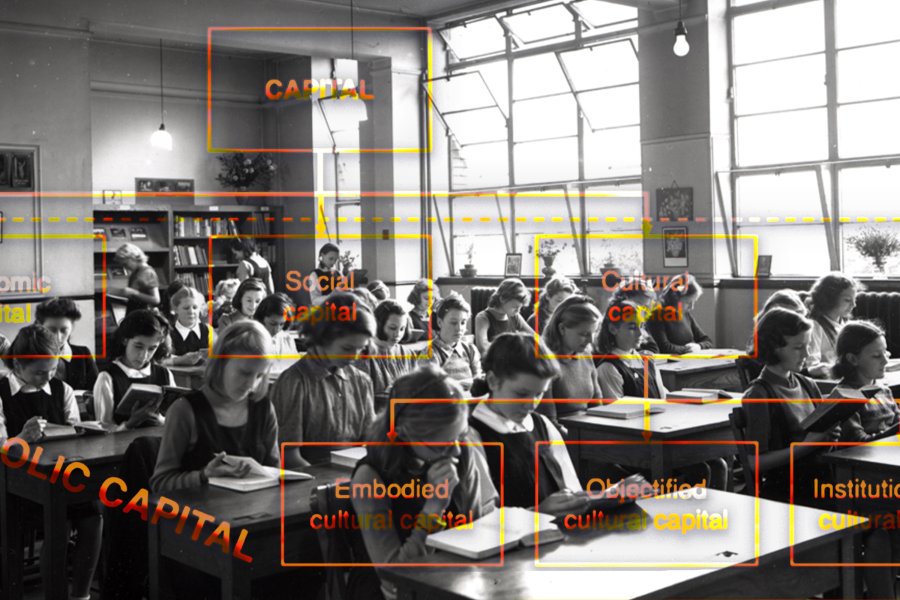
Literární kánon, ze kterého si maturantstvo vybírá četbu, neurčuje stát. Skládají ho školy podle toho, co si o…
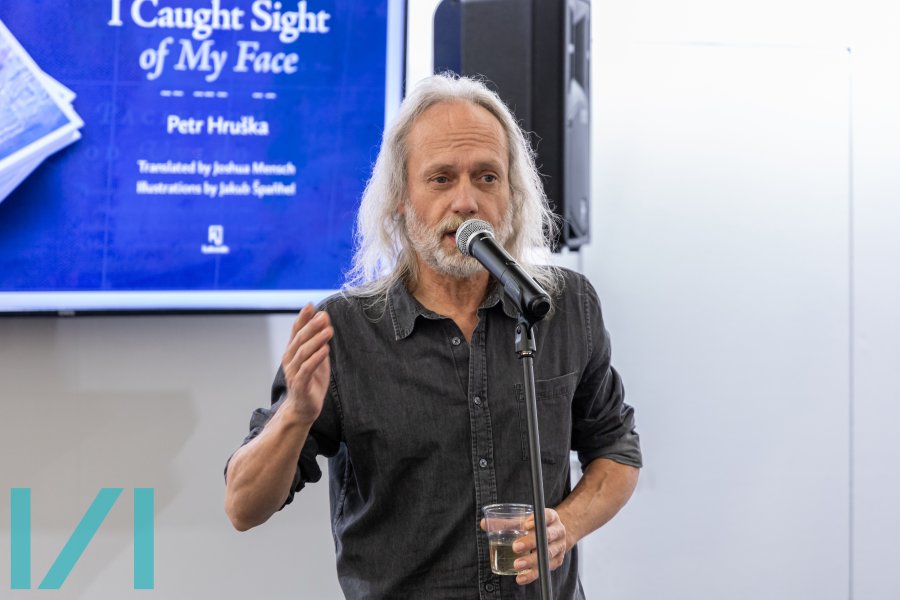
Mezi českými hosty na Frankfurtském knižním veletrhu byl i básník Petr Hruška a představil zde své dílo v německém…

Letos tomu bude 150 let* od prvního startu Velké pardubické. Kromě titulu nejstarší sportovní události v České…

"Potřebujeme teď chladnou hlavu, jasnou mysl, kreativní myšlení a odvážná, nezávislá nakladatelství. Všichni…
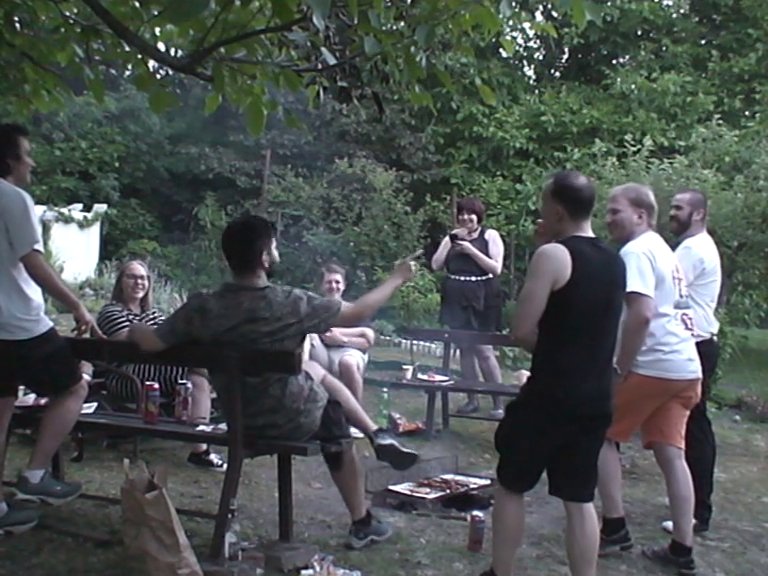
V předchozím textu o nostalgii po základce „Vůbec bychom se nepoznali, kdybychom spolu nechodili do školy“…
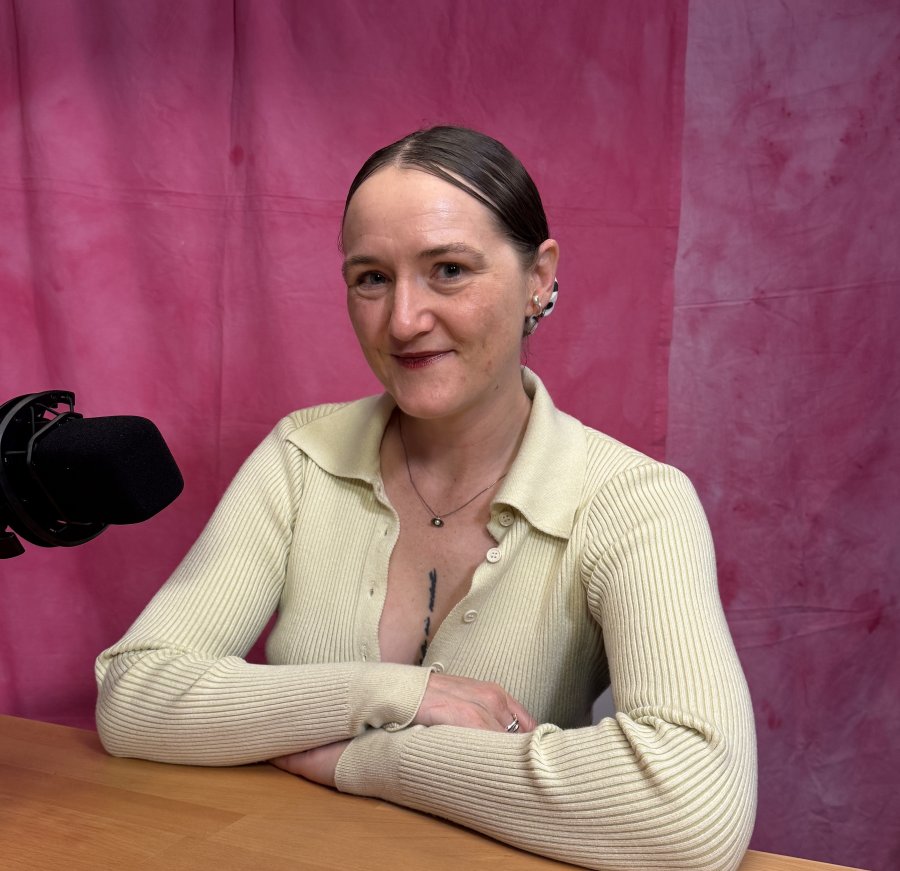
„Když slyšíme mluvit muže v podcastu nebo v poslanecké lavici, máme tendenci kývat a říkat si, že to je chytrý…

„Jsme tady i pro většinou společnost. Není to jen pro nás samotné,” říká Erik Bartoš k založení českého…
Umělé oplodnění pro svobodné matky z vlastního rozhodnutí by pomohlo i lesbickým párům. Umožní stát asistovanou…

Literární senzace demaskuje iluzi tradiční rodiny, když influencerku s celou rodinou vrací do bájného předminulého…
V dubnu 2026 mediální magnát Vincent Bolloré koupil nakladatelství Grasset, ihned poté přišel o místo šéf…