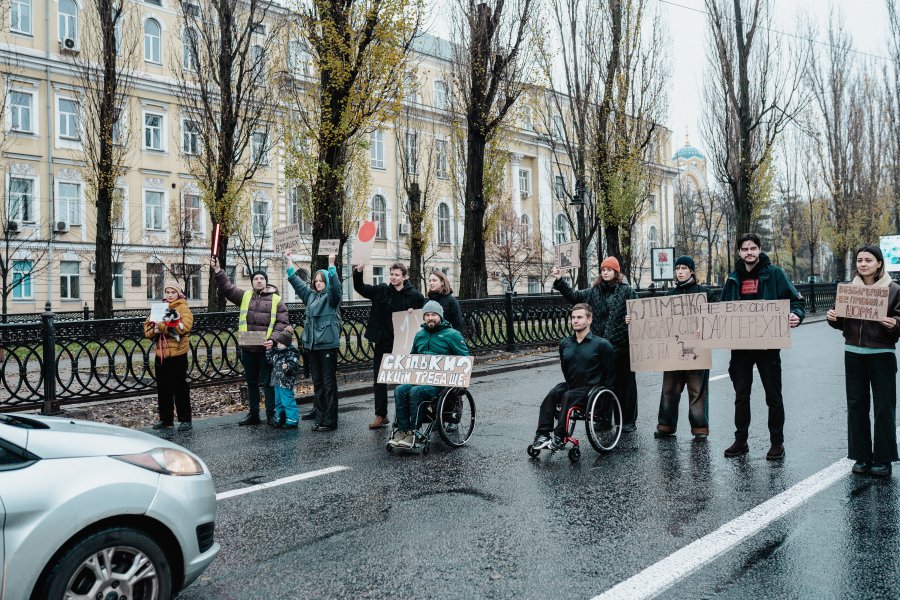
„Kde je náš přechod?“ Jak ukrajinští aktivisté bojují za bezbariérový Kyjiv. I za války.
Jak zůstat občansky aktivní i za války? Potíže hlavního ukrajinského města neztrácejí na naléhavosti ani dnes &ndash…
A few years ago, Ema (name changed) and I stood in a forest on the outskirts of Pilaitė, a district of Vilnius, Lithuania. She was seventeen at the time. We had slipped away from the streets and residential buildings, though not from the sounds of the city. Around us, the ground was littered with rubbish – food wrappers, alcohol bottles, and a few stained mattresses.
Here “someone fell in love, someone fell in love and then called it a mistake, someone got into a fight, someone got beaten up, someone felt sorry for another, someone was fighting through a hangover in that bed”, she said. “Over there my ex fell from a branch.”
Pilaitė, a rapidly growing residential district, is known for its modern housing, green spaces, and family-friendly environment. It also has about 500 social housing units, concentrated in one area.
Ema is one of the young people who spend much of their time on the streets or other public places without parental or guardian care – often from early morning until late at night, skipping school in the process. I met her through social workers who build relationships with young people in places where they gather (e.g., streets, courtyards, playgrounds, parks, shopping centres), offering support or connecting them to services that might help.
Street-based social work focuses on reaching young people at risk and with multiple complex problems. Their main goal is to connect with those who are socially excluded and disconnected from conventional support systems. In this way, social workers also work on bridging the gap between marginalized groups and society at large.
There are several organisations in Vilnius working with young people like Ema, but the exact number of those who spend much of their time on the street remains elusive, hidden behind the transient nature of their lives and the informality of their presence in public spaces.
“Can I smoke in front of you?,” Ema asked. I was twenty one then – and hardly in a position to grant or deny permission. But it seemed to me that Ema maintained a kind of respectful and instinctively institutionalised distance between us. I didn’t want that. Nor did I want to interfere in her life in the slightest, so I said something along the lines of “do what you would do regardless”. She started vaping.
We sat on a fallen tree. Ema told me that she and her “crew” (crew or gang refers to a group of young individuals who share a distinctive culture of communication and defined roles. Typically, this group is a social construct, existing as long as the members have a shared interest – author’s note) used to spend a lot of time here – grilling shashlik, playing cards, chatting, drinking. The latter led to “lots of good and bad memories”. She showed me some of those memories, stored in the phone gallery. Most of them were of drunk teenagers singing and dancing.
Ema was born in Vilnius. So was I. We’re close in age, but if not for the article I wanted to write about the youth of Pilaitė, we probably never would have met. And Vilnius is small – it seems like the kind of place where, if you spend enough time in the city center, you eventually cross paths with almost everyone.
Ema and her friends mostly stick to their own neighborhood, but sometimes they drift into central Vilnius. As she lists the places they visit, I wonder if we’ve ever unknowingly shared the same streets. Then I remember the times I’ve seen rowdy teenagers and thought “not them again”.
When I first told people close to me what I was working on, I heard a lot of comments about it being nonsense. That these young people just don’t want to do anything in life (otherwise they wouldn’t skip classes and study), that they only want to drink and do drugs, and they are to blame for the situation they find themselves in. For a long time, I had absorbed a similar meritocratic mindset: work hard, and you can achieve anything. No excuses. Nothing else required. A neat, simple illusion of equality.
But it seems that Lithuanian society remains unaware or disconnected from the realities of these young people. The disparity between their lived experiences and the more dominant societal perceptions is striking, fostering a kind of polarization that isn’t always marked by visible conflict. Instead, it often manifests in what is left unspoken – the issues that remain outside the public conversation and off the national radar.
I met a 14-year-old girl in Pilaitė, one of whose brothers was a drug addict and the other was in jail. Their parents didn’t take care of their children. I have met teenagers who were kicked out of their homes by their parents, and teenagers who had no parents at all.
The issue isn’t the kids themselves but the socio-economic environment that shapes them, reproduces itself, traps them in cycles they didn’t create. It’s not just about money – inequality is reinforced through social connections, cultural knowledge, and symbolic recognition, all of which are unequally distributed. Some young people inherit not just wealth but networks, status, and a sense of belonging in spaces of power, while others are left navigating a world that was never built for them.
Blaming a fifteen-year-old for falling into harmful social circles feels absurd. She or he simply doesn’t know how it could be otherwise. To dismiss these young people as chaotic, reckless, or incapable of change misses the point entirely as their actions are simply a product of their environment. It’s not about their supposed failures. It’s about whether we’re willing to ensure the safety of vulnerable groups in our society.
There’s also the everyday refusal to see them in general. For example, young people gather at the Pilaitė mall, but security waves them off. Passersby on the street, noticing a group of teenagers speaking too loudly, call the police, assuming trouble before it even begins. Sometimes it seems that they don’t have to do anything wrong to be treated as a problem. Their presence alone is enough.
I spent a few days with these young people in Pilaitė, mostly in silence. Just being there, watching. Their reluctance to talk made perfect sense.
Their behaviour is often provocative. They swear constantly, get angry, sometimes lack patience, and resolve conflicts through physical means. Young people who spend time on the streets are also more easily and frequently involved in smoking, drinking, and drug use. Ema told me that drinking one or two litres of vodka every other night is “the norm”. “There are people who just bring it, and you pay – that’s it, even if it’s three in the morning. I used to do drugs too, but now I’ve given them up.”
But alongside this, every young person I met in Pilaitė showed a different side: they were caring, sensitive, and deeply loving. They knew when to offer a friend a shoulder to lean on. They call their friends “family”, because, for many of them, family is often not a reliable source of support.
Ema and her friends feel more at ease or find the streets more familiar than their homes and schools. When their needs are unmet, when problems become too large to handle on their own, on the street they create their own little worlds, a safe space – perhaps the only one where they feel accepted without prejudice and conditions, and where they find it possible to be “good”. Even though they are inherently good, they don’t feel that way anywhere else.
According to the State Data Agency of Lithuania, 19.7% of people aged 18–24 in Lithuania were at risk of poverty in 2023. Eurostat reports that 24.3% of the entire Lithuanian population were at risk of poverty or social exclusion that year. Lithuania also had the second-highest income disparity in the EU – the income gap between the richest 20% and the poorest 20% was 6.32 times.
Lithuania’s tax system, often criticized for its regressive nature, exacerbates income inequality. In 2021, Lithuania’s redistribution rate stood at 32.3%, significantly lower than the EU average of 41.2%. This means that Lithuania invests less in public services and social protection than most EU countries, leaving those in need to navigate an unforgiving system largely on their own.
Struggling to make ends meet is one thing – being judged for it is another. In 2022 and 2023, the National Network of Poverty Reduction Organisations (NSMOT) in Lithuania has brought together people facing social exclusion to share and discuss their experiences. Beyond economic difficulties, they spoke about something just as damaging: stigma. Participants shared feelings of despair and humiliation. As one put it, “I went to a vocational school, for programming, but everybody said ‘you can’t do it,’ I went to university – ‘you can’t do it,’ I started to get healthy – ‘you can’t do it.’ But I’ll get well soon and I’ll work.” Another added, “It makes me angry that if you’re receiving welfare benefits from the state, you’re no longer human.”
When Ema and I were by one of the lakes in Pilaitė, she told me that “this place is so enchanted and very peaceful. <...> There are fewer people here who will look at you and tell you stuff.” I nodded, unsure whether to ask what “stuff” meant. But I already knew.
Perhaps the real question isn’t why these young people end up on the streets, but why the streets feel like a better option than the places meant to care for them. It’s easier to look away, to let assumptions stand in for understanding. But if we really paid attention – if we saw them not as a problem to be solved, but as people – what might change?
Austėja Pūraitė is a journalist from the lithuanian media NARA.
This content was created as part of the Perspectives – the new label for independent, constructive and multi-perspective journalism. PERSPECTIVES is co-financed by the EU and implemented by a transnational editorial network from Central-Eastern Europe under the leadership of Goethe-Institut. Find out more about PERSPECTIVES: goethe.de/perspectives_eu.
Co-funded by the European Union. Views and opinions expressed are, however, those of the author(s) only and do not necessarily reflect those of the European Union or the European Commission. Neither the European Union nor the granting authority can be held responsible.


růžová čepice Fulltime drama
Zvolte podporu, která je Vám nejbližší! Revue Prostor roste – a s tím i naše odpovědnost. Rádi bychom, aby naše platforma zůstala otevřená a přístupná všem.
Díky Vaší podpoře můžeme dále publikovat kvalitní autorské texty, férově odměňovat naše spolupracující a budovat udržitelný model, který drží nezávislou žurnalistiku při životě.
Jak zůstat občansky aktivní i za války? Potíže hlavního ukrajinského města neztrácejí na naléhavosti ani dnes &ndash…
71 %. Takovou plochu naší planety zabírá otevřená voda, ale jen zhruba 5 % je zevrubněji prozkoumáno člověkem. Není…

„Psychické a fyzické projevy PMS* a PMDD se zdvojnásobí, když je to něco, za co se mám stydět a tajit to. Protože…
Rakouský Wiener Festwochen patří k nejsledovanějším divadelním festivalům svého druhu. Elitní kuratelu…
Do svých osmnácti jsem se svými spolužáky ze základky strávil v podstatě polovinu života. Dennodenně jsme se vídali…

Sexuální potřeby jsou plnohodnotnou součástí života stejně jako potřeba spánku, jídla nebo dýchání. A bylo by mylné je…
„Český film mě neprovokuje, nechává mě lhostejným, je takový korektní. A to je něco, co mě na něm štve nejvíc,…
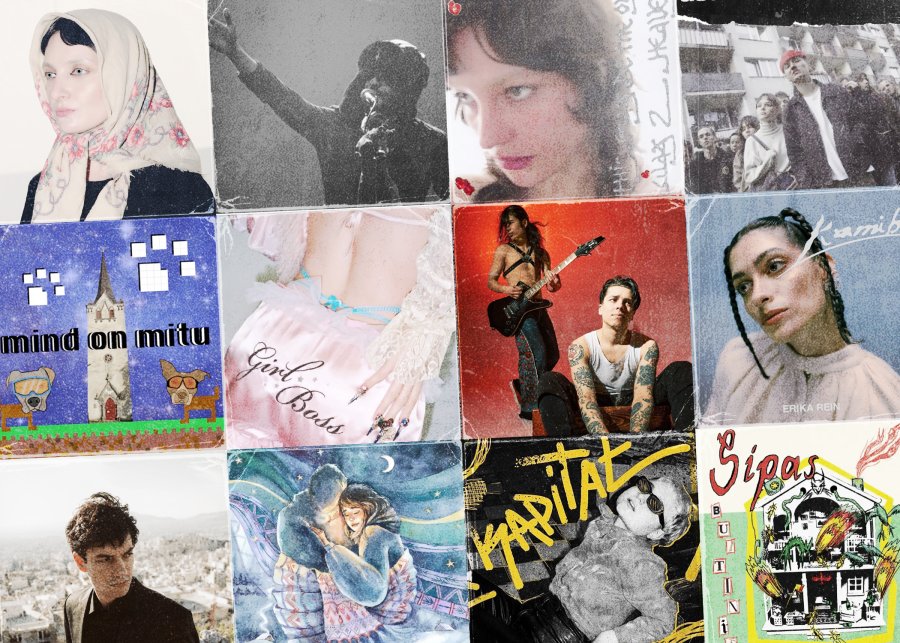
Jak to zní, když dospíváte v současné Evropě?
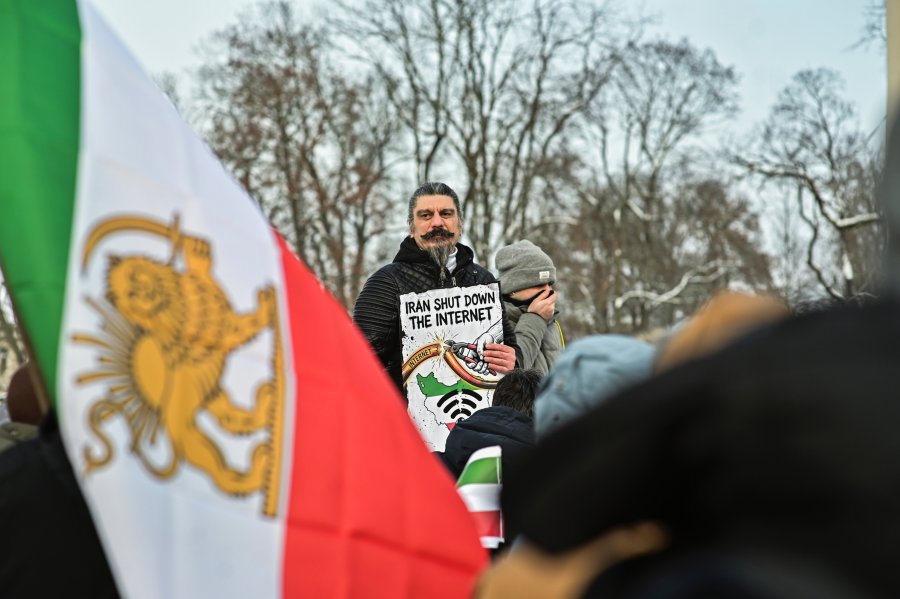
An Iranian journalist in Vilnius follows the news from her home country as it moves through a historic and deadly…

Karlovarské lázně jsou místem, kde se geologické pohyby protínají se středověkými legendami a specifickou kulturou…