
Uzdravování jako prožívání nového řádu u George Canguilhema
České prostředí objevuje stěžejního francouzského „filozofa života“ George Canguilhema teprve v posledních…
Poles are one of the most polarized societies in Europe. This polarization simultaneously destroys public debate and enables successive electoral victories. However, during the ongoing presidential campaign, the axes of division are different from before.

For nearly two decades, Polish politics has been dominated by two parties—Law and Justice (PiS) and the Civic Platform (PO), which now operates as the Civic Coalition. This is paradoxical, considering both parties share similar origins. For years, they were dominated by conservatives and emerged from the anti-communist opposition. They have jointly dominated the Polish political scene since 2005 when the discredited post-communist left lost power. These parties were once so similar that they even considered running together in elections.
Their excessive similarity means they compete for the same electorate. As a result, society has split between two right-wing parties. A pivotal moment in the escalation of polarization came in 2010.
At the time, Polish politics was in a state of cohabitation—President Lech Kaczyński was from PiS, while the government was led by Donald Tusk, the leader of PO. During a trip to Katyn, where the Soviets executed over 20,000 Polish officers in 1940, the presidential plane crashed while landing. All 96 passengers perished, including the president, his wife, ministers, top-ranking military officers, and cultural representatives.
The shock from this tragedy shook the entire country. Lowered flags, silenced disputes, solidarity, and the sincere tears of politicians and journalists on live television—it seemed like a turning point. Something had broken, but perhaps something new could emerge.
Unfortunately, it turned out to be the beginning of a downward spiral. Just days after the tragedy, the government and opposition began trading accusations of responsibility for the visit’s organization and its tragic outcome. One of the greatest tragedies in modern Polish history immediately became a tool in political warfare. Jarosław Kaczyński, the deceased president’s brother and leader of PiS, outright accused Tusk of responsibility for the crash. In the background, conspiracy theories emerged about a plot with the Russians—without any evidence. The scale of the tragedy translated into the scale of political divisions. Either you were with us or with those who—allegedly in collusion with Russia, Poland’s eternal enemy—murdered the president. In such a climate, rational political debate became impossible.
Today, it is difficult to find a topic that remains purely private. If an issue has political potential, it will certainly be exploited. Politicians think only in terms of the next election, showing little concern for the long-term consequences of their rhetoric and actions. Yet these consequences are serious—nearly 30% of Poles believe that the Smolensk crash was an assassination, despite the lack of credible evidence.
Although the political capital of the Smolensk tragedy has been exhausted, the problem remains. If a significant portion of society believes that the state was involved in the president’s death, the natural response is distrust in its institutions—a sentiment deeply ingrained in Polish history.
Jarosław Kuisz, editor-in-chief of Kultura Liberalna, discusses this in his book The New Politics of Poland: A Case of Post-Traumatic Sovereignty. After Poland’s third partition in 1795, sovereign state structures disappeared for nearly 200 years, except for a brief interwar period. In times when Poland lacked sovereignty, patriotism meant opposing the state apparatus. This sentiment, along with the history of uprisings and struggles for independence, forms the foundation of modern Polish culture, art, and education.
The problem is that while this pattern was helpful before 1989 in preserving national identity, today it is destructive. It undermines contemporary Polish statehood. Yet, for many politicians, it remains a convenient tool for mobilizing voters. Hence, the radical claims about the “collapse of the country,” “Poland in ruins,” or the absurd statements of ultra-right politician Grzegorz Braun, who has described Poland as a “Russian-German condominium under Jewish trusteeship.”
Questioning the state and its institutions is a recurring theme among Polish politicians, across the political spectrum. Every election campaign features calls to “reset the system” and rebuild Poland from scratch. All in the name of polarization—either us or them. All or nothing.
The effects are visible. According to the international research consortium Digital Society Project, Poland’s polarization index increased from 2.71 in 2001 to 3.83 in 2021—a 41% rise in 20 years. This is higher than in many Western European countries, such as France (3.17) or Germany (2.43).
Experts from the New Community Foundation summarize: “Polarization in Poland is very high compared to other European countries. Even in the deeply divided United States, the polarization index is lower than in Poland, at 3.5. Only Hungary and Bosnia have higher polarization levels (both at 4.0).”
The Smolensk tragedy has lost its political potency. Today, the main axes of division are immigration, media freedom, the rule of law, and women’s rights—especially abortion, which was severely restricted in Poland in 2020. Public debate is shifting further to the right, an effect of Donald Trump’s presidency, which reinforced right-wing trends in Europe.
This is evident in the current presidential campaign ahead of the May 18 election. Rafał Trzaskowski, the centrist-liberal Civic Coalition candidate, carefully maneuvers between policy positions, avoiding the most progressive stances to attract conservative voters. His lead over Karol Nawrocki, the PiS candidate, seems secure, but he may not be the biggest winner of this election.
In the shadow of the two-party duopoly, Confederation is emerging, with its candidate, Sławomir Mentzen, polling at nearly 20%—a record for the party, which champions nationalism, deregulation, and an anti-immigration stance. Confederation is also the most popular party among young voters—those who want to tear down the existing system rather than fix it.
What was once a war between PiS and PO may transform into an entirely different conflict. The division into two camps will remain, but its substance will change. It will no longer focus solely on the past—Smolensk, the post-communist transition, or political elites—but on new issues: immigration, sovereignty, tradition, and the role of the state.
There is little hope for a calming of public debate or a return to political normalcy. A return to the past is impossible. The end of one polarization does not mean the end of divisions—on the contrary. The new polarization may be even sharper, more brutal, and more relentless. Roles may shift, but emotions will escalate.
Positioning oneself as a defender of the old system is a path to defeat. Conceding to populists and adopting their narrative is a slippery slope for the entire political system. People in Poland, much like in the United States, want change. Politicians like Trzaskowski must offer it to them. The challenge will be presenting a vision that meets society’s needs without descending into radicalism.
Jakub Bodziony is a deputy editor-in-chief of polish media platform Kultura Liberalna
This content was created as part of the Perspectives – the new label for independent, constructive and multi-perspective journalism. PERSPECTIVES is co-financed by the EU and implemented by a transnational editorial network from Central-Eastern Europe under the leadership of Goethe-Institut. Find out more about PERSPECTIVES: goethe.de/perspectives_eu.
Co-funded by the European Union. Views and opinions expressed are, however, those of the author(s) only and do not necessarily reflect those of the European Union or the European Commission. Neither the European Union nor the granting authority can be held responsible.

Číslo 125
Zvolte podporu, která je Vám nejbližší! Revue Prostor roste – a s tím i naše odpovědnost. Rádi bychom, aby naše platforma zůstala otevřená a přístupná všem.
Díky Vaší podpoře můžeme dále publikovat kvalitní autorské texty, férově odměňovat naše spolupracující a budovat udržitelný model, který drží nezávislou žurnalistiku při životě.
České prostředí objevuje stěžejního francouzského „filozofa života“ George Canguilhema teprve v posledních…

„Jsem v gastronomii víc jak patnáct let, dvacet let možná. Mám pocit, že jsme se trošku v něčem zbláznili,…

Ústecký kraj je často vnímán jako industriální – kraj těžby, elektráren a průmyslu. Mohl být ale i krajem lázní,…
„Myslím, že je dobrý vytvořit si vlastní jazyk pro tu celou událost. Mě třeba slovo potrat děsně iritovalo &ndash…

Více než padesát let stará novela Svět je les, les je svět Ursuly K. Le Guin, která loni vyšla v češtině, na několika…
Věta „žádné ženské umění neexistuje“ padla na počátku devadesátých let v anketě kunsthistoričky Věry…
Všechno se mění, ale podstata je pořád stejná. Že by se vlastně neměnilo nic? Blogerky zestárly a jsou z nich babičky.…
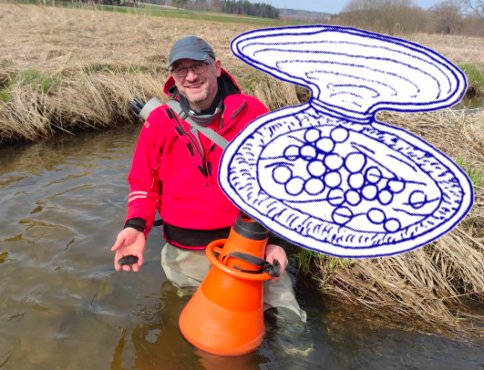
S terénním biologem Robertem Ouředníkem jsme se potkali jedno lednové dopoledne v kavárně v Českých Budějovicích u řeky…
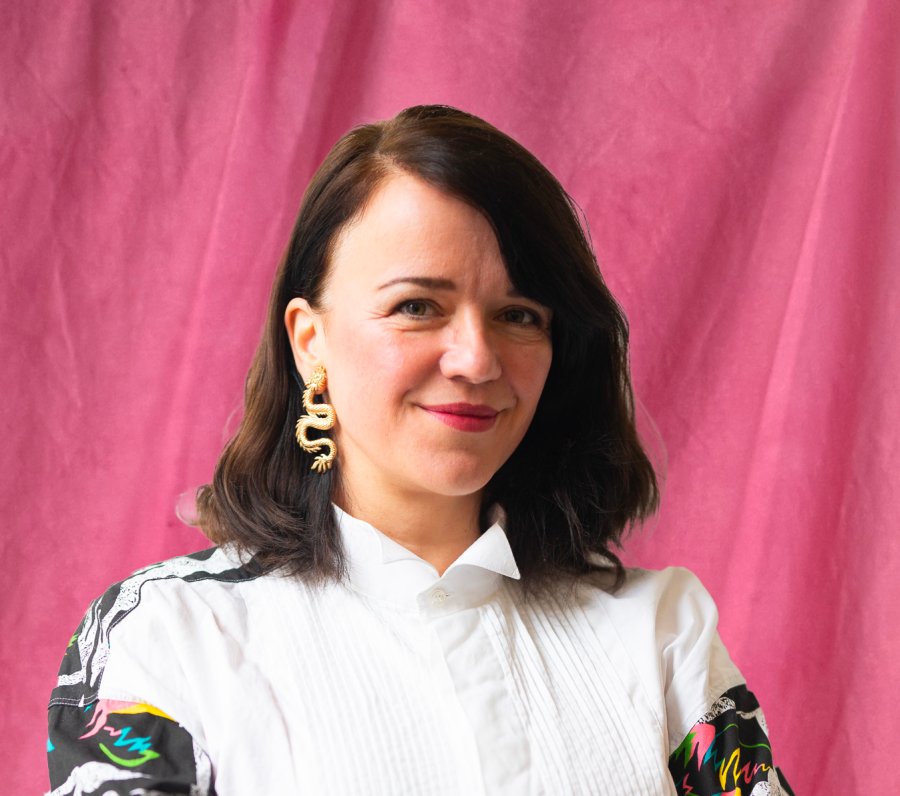
„Velká odpovědnost leží na samotném spotřebiteli. Musí se vzdělat, číst štítky, vědět, jak o oblečení pečovat. A…
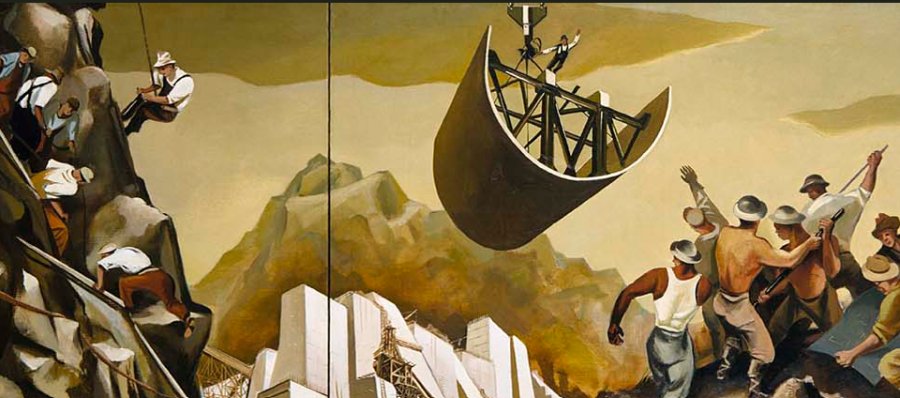
Romantické vodní hladiny splývající s okolní krajinou, strohé betonové zdi, které ji přetínají. Pomníky destrukce i…
„Já jsem prodělala rakovinu ve svých 25 letech a to, co mě štve, je zaprvé rostoucí procento lidí mezi 15 a 39…
V létě 1843 se na cestu do Prahy vydal Michael Viszánik, primář a ředitel vídeňského ústavu choromyslných, jak se…
„Jako teenager jsem působila v Budějovickém Majálesu, narazila jsem občas na to, že se tady k mladým nepřistupuje…
Jak zůstat občansky aktivní i za války? Potíže hlavního ukrajinského města neztrácejí na naléhavosti ani dnes &ndash…