
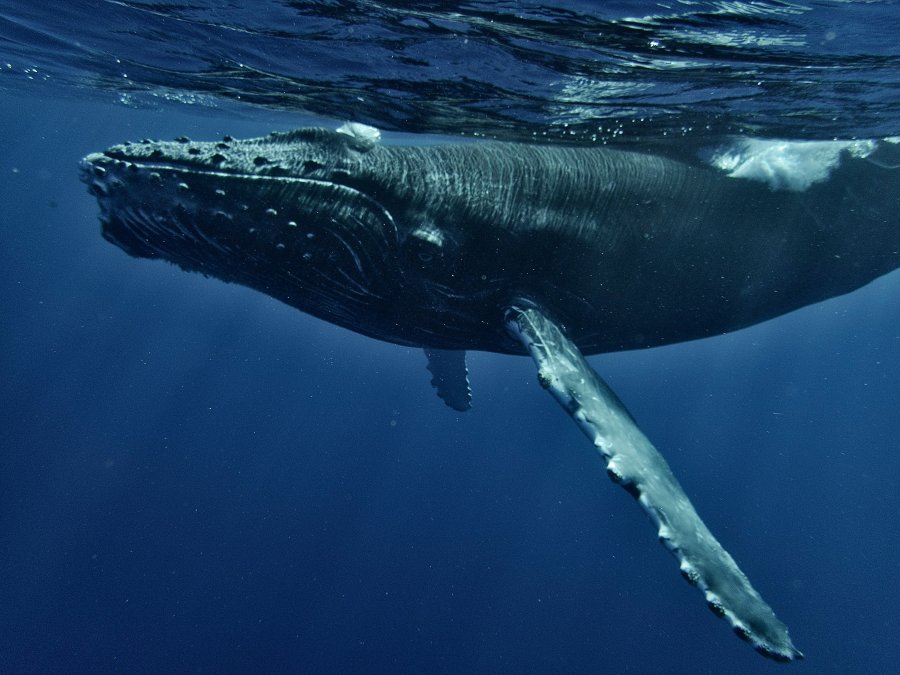
Jak se kytovci stávají jedněmi z nás
Obrazy a záběry kytovců mě dovedou okamžitě uklidnit a zároveň ve mně vyvolávají hluboký žal. Dlouho nás přitom jejich…
Artemis Akbary is the voice of the Afghan LGBTQI+ community, which faces persecution, discrimination, and danger. From the Czech Republic, he leads the Afghan LGBT Organization (ALO) and, through international organizations, fights for the rights of people seeking safety far from home. He offers insight into the challenges faced by LGBTQI+ refugees and his vision for the future of a community that often remains overlooked.
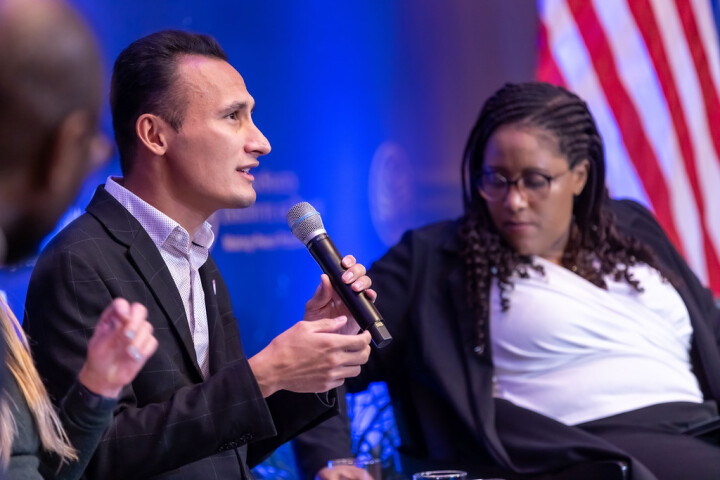
Living as a refugee in Turkey showed me how invisible and vulnerable LGBTQI+ Afghans are, not just back home under the Taliban but also in exile. I saw people like me struggling without support, often silenced by fear. When I reached the Czech Republic, I understood that I had both the safety and the responsibility to speak out. Turning my personal story into advocacy wasn’t only about me; it was about making sure that our community is seen, heard, and represented where decisions about our lives are being made.
Growing up in a conservative environment meant I had to hide big parts of who I was, which created a lot of fear. But it also gave me a deep understanding of what many LGBTQI+ Afghans go through every day. Today, their situation is even worse under the Taliban; they face persecution simply for existing, and sometimes I cannot imagine how difficult it is to survive in such an environment. That is why I dedicate myself to working at the international level to raise their voices, to make sure the world does not ignore them, and to push for changes that protect the rights of LGBTQI+ people not only in Afghanistan but globally.
In Afghanistan, “gender apartheid” describes the Taliban’s systematic exclusion of women and LGBTQI+ people from every part of public life. It’s not just discrimination; it’s an intentional system designed to erase people from society based on gender and identity. For me, it’s important that the world recognizes this as a crime against humanity because it gives language to the scale of what is happening. When we call it what it is, we are not only naming the suffering but also demanding accountability. Without that recognition, these violations risk being normalized or overlooked, and the people enduring them remain without justice.
What the international community often overlooks is that LGBTQI+ Afghans face some of the most brutal forms of violence, rape, torture, public flogging, and even extrajudicial killings, simply because of who they are. On top of that, while Afghanistan is facing grave human rights violations and a deep humanitarian crisis, LGBTQI+ people are usually excluded from international protection mechanisms and rarely benefit from humanitarian aid. That’s why, through ALO, we’ve stepped in to fill part of this gap: we have provided cash assistance and other life-saving support to more than 700 people. It’s far from enough, but it shows what’s possible when the community itself is centered.
Another thing the international community often avoids talking about is justice and accountability for LGBTQI+ victims and survivors of systematic persecution. I have advocated at the international level, particularly through the ICC, together with our partners, to ensure that these crimes are not ignored. The result was historic: the ICC issued arrest warrants for Taliban leaders, and for the first time in history, an international court recognized the persecution of LGBTQI+ people.
Everyday life for LGBTQI+ people in Afghanistan is extremely harsh and dangerous. They live under constant fear, such as the fear of being exposed, arrested, tortured, or even killed. Many tell me about the daily struggle to hide their identity just to survive. They cannot study, work, or even move freely without the risk of harassment or violence. The concerns they share with me are very basic but heartbreaking: safety, food, shelter, and a chance to escape. Some also talk about the deep loneliness of being cut off from any community or support. These are not just individual stories: they reflect a reality where simply existing as LGBTQI+ in Afghanistan is a matter of life and death.
For Afghans, leaving the country is already very difficult because they need visas for almost every destination, and it’s nearly impossible to get one. That’s why many are forced to take dangerous routes just to save their lives. Usually, they first seek refuge in Iran or Pakistan, but for LGBTQI+ people, those countries are not safe either. In Iran, for example, same-sex relations can be punished by the death penalty. As a result, some ultimately continue their journey to Europe to seek asylum.
That journey itself is extremely dangerous. From the people I have interviewed and spoken with, many described facing physical violence, beatings, sexual harassment, and pushbacks by EU border police. Transgender people in particular are especially vulnerable to ill-treatment during these crossings. And even after they finally make it to Europe, the challenges don’t end: accessing safe housing, integrating into society, and having their asylum claims recognized can still be very difficult.
I spent several years in Iran and Turkey, and I am still in touch with many Afghan LGBTQI+ refugees who live there. In Iran, the situation is extremely dangerous: same-sex relations can be punished by the death penalty, and LGBTQI+ people live in constant fear of arrest, violence, or even being reported by their own families. In Turkey, while there is no death penalty, life is still very hard. Refugees face daily harassment, a lack of legal protections, unemployment, and the risk of being deported back to Afghanistan. For LGBTQI+ people, the discrimination is even harsher, and there are very few safe spaces or services tailored to their needs.
Compared to this, Europe – and countries like the Czech Republic – offers far more safety. Here, LGBTQI+ refugees don’t face the threat of execution or deportation to Afghanistan in the same way, and there is at least some access to asylum procedures, legal rights, and social services. But this does not mean life is easy. In Czechia, for example, transgender asylum seekers still face serious discrimination, particularly in refugee camps. I know of cases where queer asylum seekers were rejected just because they “could not prove” they are gay. For heaven’s sake, how is someone supposed to prove they are gay or trans?
Another problem is that authorities often don’t understand, or even ignore, the scale of trauma LGBTQI+ refugees endure. During the asylum interview, which is literally a life-saving interview, people are asked to speak for hours and answer extremely personal questions, even when they are deeply traumatized. Racism is another issue that unfortunately exists in everyday life. So yes, Europe is safer, but there are still serious barriers and a lot of work to do to make asylum systems truly fair and humane for LGBTQI+ refugees.
Running the Afghan LGBTIQ+ Organization (ALO) together with my partner has been a source of strength for me. The work we do is not easy; we deal with heartbreaking stories and very real life-or-death situations, but having a partner who shares the same vision makes it possible to keep going even in the most difficult times.
Through ALO, we have already supported hundreds of LGBTQI+ Afghans. Our work ranges from humanitarian assistance, like providing cash aid, food, shelter, to international advocacy, where we make sure that the voices of Afghan LGBTQI+ people are heard at the UN, European Parliament, and other international platforms. One of the initiatives I’m particularly proud of is our refugee pilot program in Czechia, which focuses on creating safe spaces and supporting integration for LGBTQI+ asylum seekers and refugees. These are not just projects on paper; they directly save lives and give people a chance to rebuild their future.
Of course, we have also been deeply affected by funding cuts by the Trump administration. This has limited the scale of what we can do, even though the needs are greater than ever. Still, every time I see someone who received our support find safety or start a new life, it reminds me why this work matters so much. Personally, it gives me hope and a sense of purpose knowing that despite all the challenges, we are creating real change for our community.
Yes, there are several stories that have stayed with me, but two in particular remind me why our work matters. One is about Samyar, a trans man from Afghanistan. He was persecuted and beaten by the Taliban simply because of his identity. We supported him with financial aid at first and later worked to help him relocate to Sweden. Today, he is safe, studying and working, and building a new life for himself. Seeing him thrive after everything he has endured is incredibly powerful.
Another story is about Pawana, a transgender woman. She was arrested by the Taliban because of her gender expression as a trans woman, and while in detention, she was brutally tortured and gang-raped by Taliban soldiers. After her release, we worked for several months to get her out of Afghanistan. We provided her with shelter and support in a neighboring country and eventually helped her relocate to Germany. She is now safe and happy there, even though she still carries the trauma of what happened to her.
Whenever I see people like Samyar and Pawana safe and rebuilding their lives, it gives me hope. It reminds me that even though the work is exhausting and sometimes overwhelming, it truly saves lives and makes a difference.
First, safe and legal pathways. Most Afghans cannot get visas, which forces them onto dangerous routes, where LGBTQI+ people face violence, harassment, and even death. Humanitarian visas and dedicated resettlement programs for LGBTQI+ Afghans would save countless lives.
Second, fair and sensitive asylum procedures. Too often, LGBTQI+ asylum seekers are rejected because they “cannot prove” their identity. Authorities need proper training to understand sexual orientation, gender identity, and the trauma refugees have experienced. Asylum interviews should not be another form of persecution.
Third, inclusive integration support. Even after receiving asylum, LGBTQI+ refugees struggle with housing, employment, racism, and discrimination in refugee camps. Policies must ensure safe housing, access to healthcare, and community-based support, especially for transgender people who face the highest levels of ill-treatment.
Artemis Akbary is an Afghan LGBTQI+ rights activist and the co-founder of the Afghan LGBT Organization (ALO). He currently serves as ALO’s executive director and is a member of the executive boards of ILGA-Asia and IGLYO. He has spoken at venues such as the European Parliament and the UN Security Council.
This content was created as part of the Perspectives – the new label for independent, constructive and multi-perspective journalism. PERSPECTIVES is co-financed by the EU and implemented by a transnational editorial network from Central-Eastern Europe under the leadership of Goethe-Institut. Find out more about PERSPECTIVES: goethe.de/perspectives_eu.
Co-funded by the European Union. Views and opinions expressed are, however, those of the author(s) only and do not necessarily reflect those of the European Union or the European Commission. Neither the European Union nor the granting authority can be held responsible.

Číslo 125
Zvolte podporu, která je Vám nejbližší! Revue Prostor roste – a s tím i naše odpovědnost. Rádi bychom, aby naše platforma zůstala otevřená a přístupná všem.
Díky Vaší podpoře můžeme dále publikovat kvalitní autorské texty, férově odměňovat naše spolupracující a budovat udržitelný model, který drží nezávislou žurnalistiku při životě.
Obrazy a záběry kytovců mě dovedou okamžitě uklidnit a zároveň ve mně vyvolávají hluboký žal. Dlouho nás přitom jejich…
„Většinová společnost má pocit, že se tady snažíme tlačit nějakou trans agendu. O to fakt nejde. Jde o to…
V předchozím textu o nostalgii po základce „Vůbec bychom se nepoznali, kdybychom spolu nechodili do školy“…
Mým největším ally v rodině je sestřenka. Brácha taky dobrý, protože jeho první koc z křesťanského tábora uzrála v…
„Jsme tady i pro většinou společnost. Není to jen pro nás samotné,” říká Erik Bartoš k založení českého…

Jak psát memoár života, který ještě neskončil? Jak zachytit svoje prožívání autenticky a neuhlazovat ho ve zpětném…
Umělé oplodnění pro svobodné matky z vlastního rozhodnutí by pomohlo i lesbickým párům. Umožní stát asistovanou…

V dubnu 2026 mediální magnát Vincent Bolloré koupil nakladatelství Grasset, ihned poté přišel o místo šéf…

„Štve mě, že média rozdmýchávají nevraživost takzvané heterosexuální většiny vůči takzvané queer menšině. Průvod…
„Jakákoliv queer tématika má na sociálních sítích velký dosah. Pokud jsi „pick me gay“, dostáváš se…

Vody na naší planetě je stále stejně, významně se ale mění její pohyb. Z hlediska České republiky by se mohlo zdát…
„Jsme vnímáni jako někdo na úplném okraji a všichni se diví, že chceme žít. Ta představa je taková: seš doma,…

„Jsem v gastronomii víc jak patnáct let, dvacet let možná. Mám pocit, že jsme se trošku v něčem zbláznili,…